Panama City › Casco Viejo
Casco Viejo
Living in Casco Viejo, Panama City
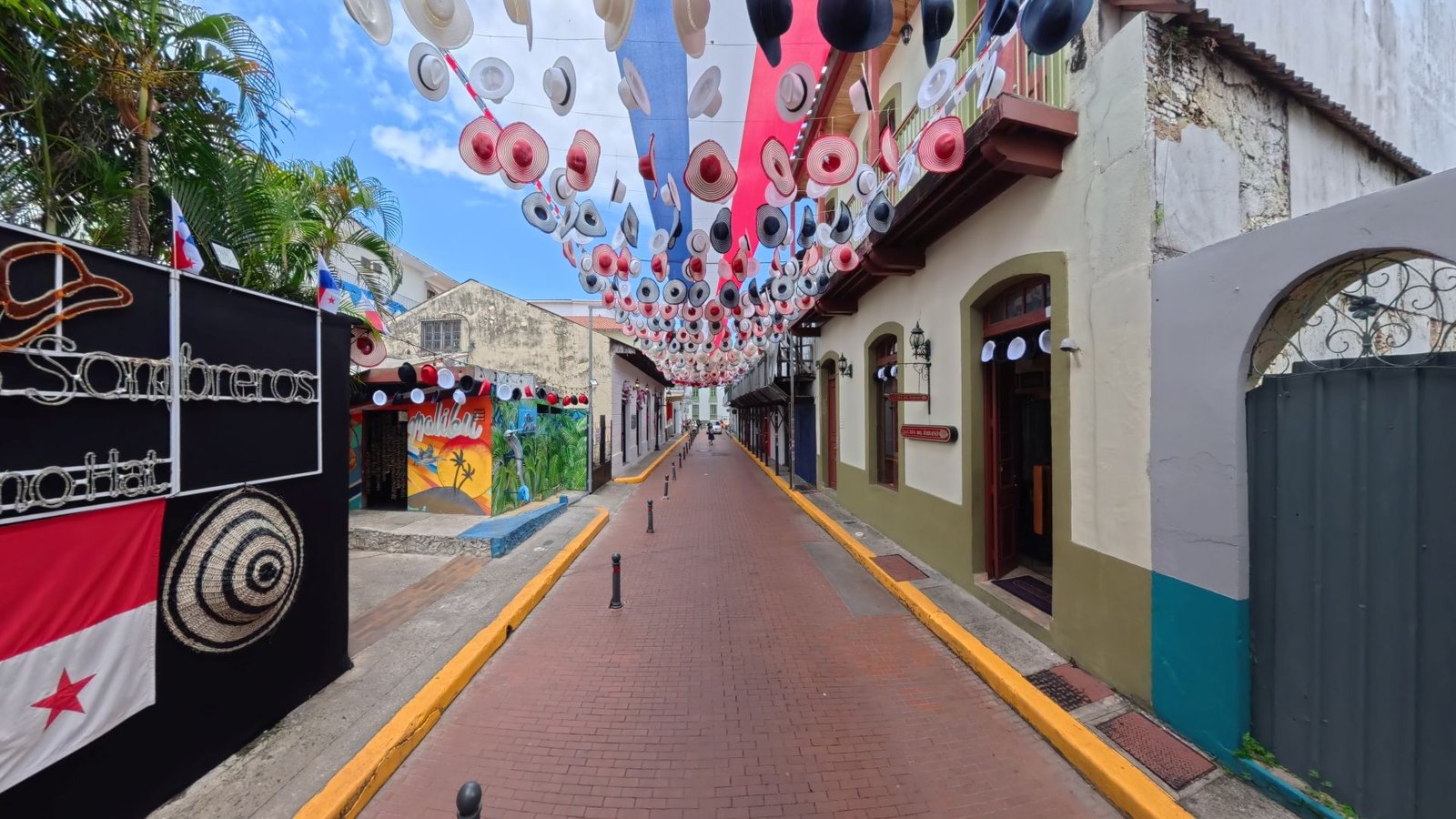
Living in Casco Viejo puts you inside Panama’s UNESCO World Heritage old town, where life runs entirely on foot, if you pick the right street.
First impressions
The Quick Take
Living in Casco Viejo means trading square metres and parking for a walkable peninsula. The whole district covers 40 acres, and you can cross it on foot in fifteen minutes. It was founded in 1673, a fortified replacement for the Panamá Viejo that Henry Morgan burned two years earlier. UNESCO inscribed it in 1997, and it now forms part of the Colonial Transisthmian Route of Panamá. Today it holds just 1,258 permanent residents and roughly 850 protected buildings. That supply cannot grow outward or upward, so prices per square metre are the country’s highest. Still, this is the most walkable district in Panama City by a wide margin. It also has the country’s densest concentration of good restaurants. Here, a car is more burden than asset. Two things decide whether it works for you: noise and parking. Both come down to which of the five zones you choose.

Is this your district?
Who Casco Viejo Is Best For
Casco Viejo suits people who want architecture, walkability, and a social life on their doorstep. In return, they give up floor space and a parking spot.
Remote professionals
Symmetrical fibre from 200 to 1,000 Mbps, laptop-friendly cafes, and coworking at the Selina complex.
Active retirees
A genuinely car-free daily routine, with groceries, pharmacies, and dining inside a ten-minute walk.
Short-term rental investors
Fixed building supply under UNESCO protection combined with constant tourist demand.
Food lovers
Fonda Lo Que Hay, Kaandela, Santa Rita, and Café Unido are all walking distance from each other.
Culturally minded couples
Theatre, galleries, and the country's best restaurants within the same few blocks.
HONEST TAKE
Anyone who needs to park a car daily will find this exhausting. Street parking effectively does not exist, and most historic buildings have no garage. The workaround is a paid valet contract. Families wanting a yard should look elsewhere, along with quiet-seeking budget relocators. Accessibility is a real problem too: the cobblestones are uneven and ramps are rare. Weekend nights also run loud until 4:00 AM.
Pro Tip: The protected historic core runs from Calle 1ª Oeste to Calle 12ª Oeste. Past that western line the policed UNESCO zone ends and El Chorrillo and Santa Ana begin.
Getting oriented
Where Casco Viejo Sits
Casco Viejo is officially the corregimiento of San Felipe. It occupies a compact peninsula jutting into the Bay of Panama, with ocean and a colonial seawall on three sides. Its only landward edge runs northwest into Santa Ana and west into El Chorrillo. That narrow neck is the district’s defining geography. It bottlenecks traffic to a handful of streets. It also leaves the quarter feeling genuinely separate from the skyline across the water. The protected historic core runs from Calle 1ª Oeste to Calle 12ª Oeste, bounded to the north by Avenida Central. That western line is a real boundary rather than a notional one. Meanwhile, Avenida Balboa and the Cinta Costera III corridor connect the district to the rest of the city. Tocumen International Airport is 25 to 30 minutes away, and Albrook’s domestic airport 10 to 15. Inside, the question is never how far, only which zone.
Where you sleep matters
The Five Zones of Casco Viejo
Casco Viejo has no neighborhoods in the usual sense. The whole district is a fifteen-minute walk end to end. What it has instead are five zones. They differ on the one variable that decides whether you enjoy living here. That variable is how loud it gets after midnight.
| Zone | Noise | Price tier | Anchored by |
|---|---|---|---|
| The Quiet Zone | Quiet | Ultra-high | Palacio de las Garzas, Palacio Bolívar |
| Plaza de Francia & Southeast Finger | Quiet | Ultra-high | Plaza de Francia, Paseo Esteban Huertas |
| Plaza Catedral & Historic Core | Moderate | High to ultra-high | Catedral Metropolitana, Plaza Mayor |
| Plaza Bolívar & Entertainment Hub | Lively | High | Iglesia San Francisco, Teatro Nacional |
| Western Border / Avenida B | Mixed, in transition | Medium to high | Santa Familia, San Felipe Neri market |
Know your corners
Where to Live in Casco Viejo
The Quiet Zone
The northern waterfront around the Palacio de las Garzas, where the presidential guard and Institutional Protection Service strictly control vehicles. Commercial traffic is eliminated and nightlife is legally restricted. As a result, these are the quietest cobblestone streets in the district by a wide margin. Housing is ultra-premium colonial restoration and exclusive boutique condominiums. It suits diplomats, senior executives, and retirees who want security and silence.
Plaza de Francia & Southeast Finger
The peninsula’s southeastern tip, cut off from through-traffic and left quiet and wind-swept. It has the best ocean outlook in the district. Real estate is high-end boutique restoration, much of it with direct water views and private terraces. Oceanfront units carry a 20% to 35% premium over interior ones. Anchored by the French Embassy, the Plaza de Francia monument, and the bougainvillea-shaded Paseo Esteban Huertas.
Plaza Catedral & Historic Core
The civic heart of the district, centred on Plaza de la Independencia. It is the gathering point for festivals, artisan markets, and daily tourism. Apartments here are large colonial floorplans with high ceilings, exposed brickwork, and street-level lofts above cafes and boutiques. Busy by day and moderately lively at night. The Catedral Metropolitana, the Municipal Palace, and the Interoceanic Canal Museum sit on the doorstep.
Plaza Bolívar & Entertainment Hub
The northeastern quadrant, and the epicentre of the district’s social scene. Historic streets are packed with outdoor cafes, tapas bars, and boutique hotels. Housing is restored heritage buildings with wrap-around balconies and shared rooftops. It draws younger expats and socialites who want the country’s best tables on their doorstep. This is the loudest zone in Casco Viejo, and the tradeoff is deliberate rather than hidden.
Western Border / Avenida B
The transitional strip between Calle 9ª and Calle 12ª, where the restored quarter meets Santa Ana and El Chorrillo. It is the most affordable entry point in the district. Newer compact projects like Casco View and Casa Korsi sit alongside buildings still awaiting restoration. The result is a raw, artistic character. It is popular with digital nomads and creative entrepreneurs. Even so, the western boundary is a real one and warrants caution at night.
Towers & town homes
What Housing Feels Like
There are no towers in Casco Viejo and there never will be. UNESCO protections and municipal zoning rule out high-rises, gated developments, and suburban plots entirely. That leaves roughly 850 buildings inside the protected core as a permanently fixed supply. What the stock offers instead is exposed calicanto stone and Spanish colonial tile. Double-height beamed ceilings and interior open-air patios are common. The better restorations pair those with high-end kitchens, premium finishes, and smart-home systems. Newer boutique buildings add shared rooftops, courtyards, plunge pools, small fitness corners, and secure lobbies.
Three things are worth treating as requirements rather than luxuries. The first is a heavy-duty reserve water tank, the second a full-power backup generator. Municipal supply here does fluctuate, and properties with both command a clear premium. The third is parking. Most historic buildings simply have no garage, and only select premium properties include a private covered space. Pricing reflects the scarcity: around $3,800 per square metre for resale and $4,300 for new pre-construction. The finest heritage restorations and waterfront penthouses run above $4,500.
Typical 1BR rent
$700–1,800/mo
standard studio to modern amenitized 1BR
Typical 2BR rent
$1,800–3,000/mo
$3,000+ for the luxury and waterfront tier

Life on foot
Walkability & Getting Around
Casco Viejo rates 9.5/10 for walkability, the highest of any district on this site. Here, going car-free is the obvious choice rather than a compromise. The peninsula is small enough that groceries, pharmacies, banks, plazas, and restaurants sit inside a five to ten minute walk. Narrow brick and cobblestone streets slow traffic to a crawl. In practice, that creates a genuinely pedestrian-first environment. The caveats are physical rather than structural. Sidewalks are narrow and uneven, frequently interrupted by historic doorsteps or poles. Ramps are rare, and the cobbles are a persistent trip hazard that worsens when wet.
Traffic inside the colonial grid is severe during weekday commutes and from Thursday to Saturday nights. A single delivery truck or double-parked car can stop movement for blocks. Parking is the real constraint. Street spaces are essentially non-existent. The practical answer is the Casco Parking valet system, at roughly $120 a month for unlimited 24/7 service. Cars are stored off-site and delivered to any curb by golf cart.
Nearest Metro station
Services across the city
Local Services & Essentials
Daily shopping runs through a boutique version of the usual chains. Supermercado El Rey operates a small-format store at PH Benedetti on Avenida Central, built for a pedestrian neighborhood. Felipe Motta on Calle José de Obaldía handles imported goods, specialty cheeses, charcuterie, and wine. The fully renovated, air-conditioned San Felipe Neri Public Market is a 10 to 12 minute walk out. It sells fresh meat, seafood, and produce at local prices.
There are no hospitals inside the historic core, but four sit within a 10 to 15 minute drive. Hospital Nacional is closest, and Pacífica Salud and Hospital Paitilla both handle international insurance. Local clinics cover general consultations at $25 to $30, and pharmacies sit on almost every block. Large commercial gyms cannot fit inside the protected core, so residents use boutique studios instead. Schools are out of district too. The Casco School is about 15 minutes away in Albrook. United School of Panama and the Clayton schools run 20 to 30. AVACA, the neighborhood association, runs clean-ups, spay clinics, and local projects. It is the usual way new arrivals meet their neighbors.
Browse any category across Panama City below, or jump straight to Casco Viejo listings further down this page.
Beauty & Personal Care
Find high-quality cosmetics, professional hair products, and personal care supplies
Doctors & Medical Services
Find reliable, high-quality healthcare and medical specialists
Education & Childcare
Explore a comprehensive selection of educational institutions
Food & Grocery
Search for grocery stores, natural foods, and specialty stores
Health & Wellness
Connect with premier fitness centers, serene yoga sanctuaries, and rejuvenating day spas
Home Services
Find trusted, reliable, and professional home services
Parks
Reconnect with nature by exploring the best parks and outdoor recreational areas
Pet Services
Find top-tier animal care, supplies, and specialized services
Shopping & Retail
Search for world-class shopping, home goods, hardware, and more
The honest ledger
Pros & Cons of Casco Viejo
Pros
- The most walkable district in Panama City at 9.5/10, so daily life genuinely works without a car
- Unmatched historic character: Spanish colonial, French, and neoclassical architecture inside a UNESCO World Heritage site
- The country's best dining and cafe scene, concentrated within a few walkable blocks
- Heavy, continuous Tourism Police presence makes the historic core safe on foot day and night
- Structurally capped supply: roughly 850 protected buildings that cannot be added to, which underpins long-term value
Cons
- Severe parking deficit: no street parking, most buildings have no garage, and the workaround is a paid valet contract
- Rooftop bars and clubs run to 3:00 AM on weekdays and 4:00 AM at weekends, despite municipal noise limits
- Highest cost per square metre of any district on this site, and you get less interior space for it
- Poor accessibility: uneven cobblestones, narrow sidewalks, rare ramps, and real trip hazards in the wet season
- Past Calle 12ª Oeste the policed UNESCO zone ends, and El Chorrillo and Santa Ana begin
Just next door
Nearby Districts
Santa Ana
Immediately northwest, one of the city’s oldest quarters, gradually revitalising and far cheaper. It has a vibrant Chinatown and a rougher edge.
District page coming soon
El Chorrillo
Directly west past Calle 12ª Oeste, a dense working-class district with a markedly different safety profile from the protected core.
District page coming soon
Bella Vista
A short run east along the Cinta Costera, the financial and waterfront core. It has the modern towers, hospitals, and Metro access Casco Viejo lacks.
Explore Bella Vista
Local & nearby